
Here's the Dinosaur You’d Be, Based On Your Myers and Briggs Personality Type
Okay, full disclosure: nobody really knows what a dinosaur thought about anything. There are no fossilized journals, no Cretaceous therapy transcripts, and definitely no Myers and Briggs personality assessments filled out by Allosaurus in between ambushes. So yes—profiling dinosaurs is about as speculative as it gets. But if you're a fellow dino nerd (hi, let’s be friends), this is where it gets fun.
I’ve spent weeks digging through paleontology papers, fossil records, brain-to-body ratios, behavioral theories, and evolutionary adaptations—basically trying to reverse-engineer personality types from bones and claw marks. It’s been a bigger challenge than I expected, and several times I nearly threw in the towel. Overall, this whole process has been equal parts science and chaos. But if you’ve ever wanted to know whether your favorite dinosaur was more of an INTJ or an ESFP, this one’s for you. Let’s enter the prehistoric psyche together—claws, crests, feathers and all.
Here's the Dinosaur You’d Be, Based On Your Personality Type
The ISTJ: Ankylosaurus
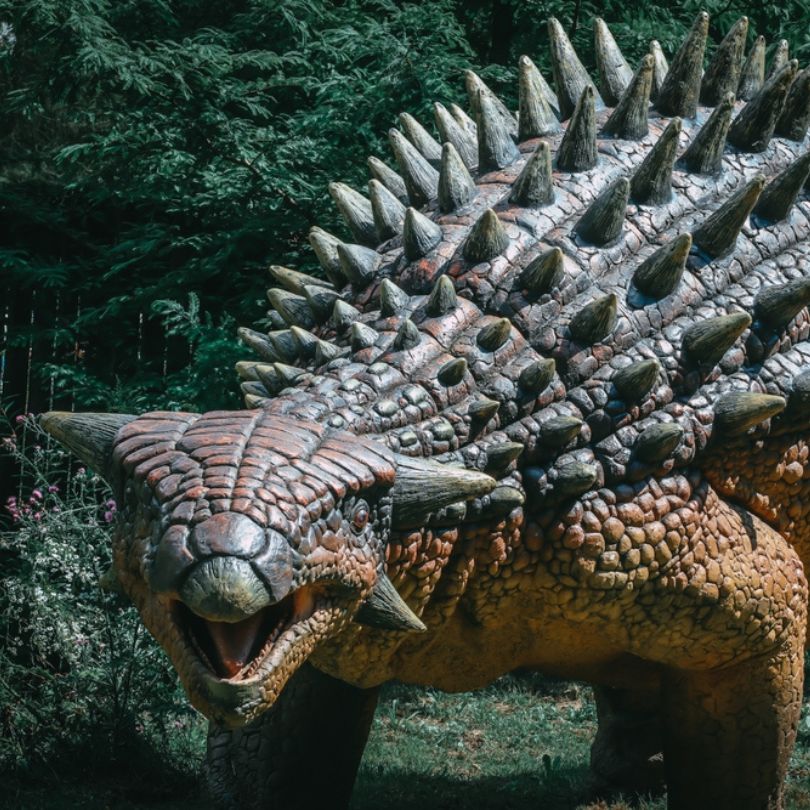
If ISTJs were a dinosaur, they’d be the Ankylosaurus—basically a prehistoric tank with a tail that could knock your car into next week. This isn’t the flashy, look-at-me type of dino. This is the quiet one doing its job, sticking to the trail and minding its own business—until someone breaks a rule or wanders into their personal space, at which point: WHACK. Ankylosaurus didn’t evolve with frills or flair. It evolved with armor. Thick, bony plates embedded in its skin protecting it from threats or intrusions. I’m sure as an ISTJ you’d also enjoy something to keep intruders at bay!
ISTJs, like Ankylosaurs, are all about structure. Routines? Yes. Predictability? Please. Random chaos? Only if you want to see their metaphorical tail club swing. But underneath that steady, armored exterior is a deep, loyal heart. These types show up. They follow through. They build civilizations—or at least keep your Wi-Fi running and your taxes filed. You may not always notice them, but when the world’s falling apart, they’re the ones who already stocked the emergency kit, cleared the debris, and made coffee. You want an Ankylosaurus in your corner. Just don’t make them late for their schedule. They will remember. Forever.
The ISFJ: Iguanodon
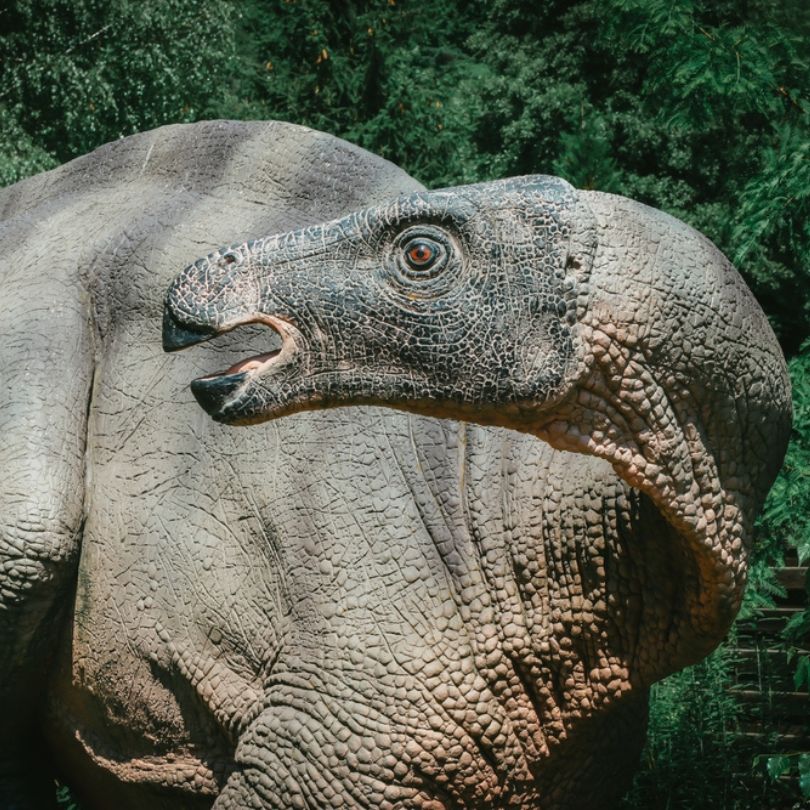
If ISFJs were a dinosaur, they’d be the Iguanodon. These gentle giants could live up to 80 years. They weren’t in a rush—they were in it for the long game. ISFJs are the same: loyal, dependable and always there when you need them, even when the world feels like it’s ending (or, you know, when the asteroid hits).
This dino walked around with calm herbivore energy, a strong sense of herd duty and thumb spikes. Not for show. For protection. Which is basically the ISFJ vibe: warm and nurturing, but push them too far—like, say, insult their best friend or insult their family meat loaf recipe—and you’ll find out just how sharp that inner boundary can be. Iguanodons weren’t here for dominance. They were here to keep the peace, raise the young, and make sure nobody got left behind. Quiet heroes in a noisy world.
ISFJs, like Iguanodons, are the gentle helpers who remember your birthday, your coffee order and that weird thing you said two years ago when you were sad. They hold space for people. They create order in a world that often feels like a T. rex in a pottery shop. But just because they’re soft-spoken doesn’t mean they’re soft. Underneath all that quiet kindness is an unshakable sense of duty and resilience. They’ll carry the emotional weight of an entire family reunion if no one else steps up. And if things get dangerous? They won’t roar. They’ll calmly raise their thumb spike and defend what matters most.
The INTJ: Velociraptor
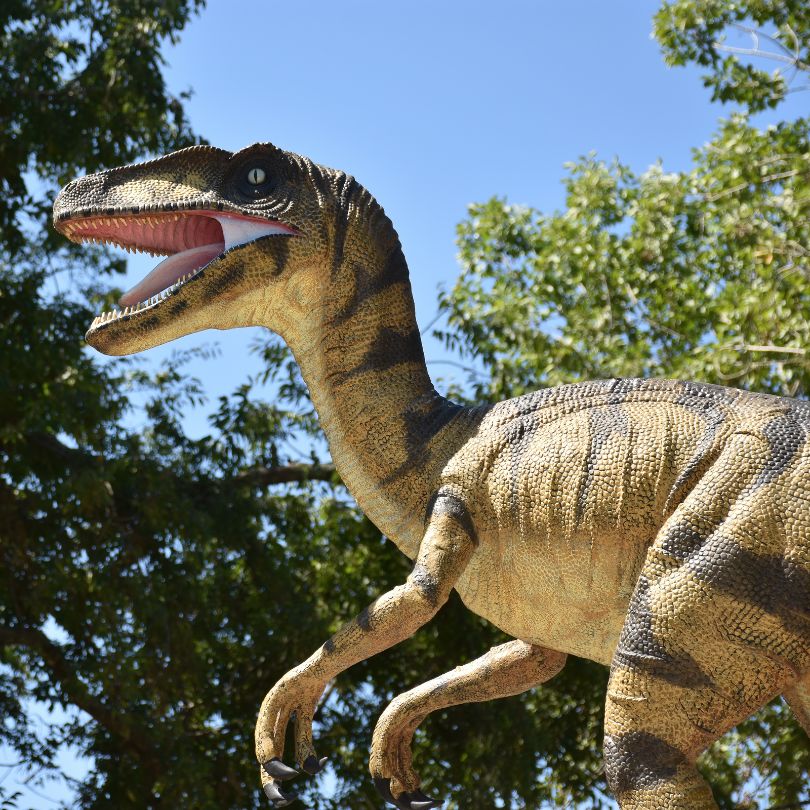
If INTJs were a dinosaur, they’d be the Velociraptor—sleek, calculated and not here to play games. At around 2 meters long and 20 kilograms, Velociraptor wasn’t the biggest predator in the Late Cretaceous, but it was one of the most intelligent and ruthlessly efficient. It had forward-facing eyes for depth perception, a stiff tail for precision balance and a retractable sickle-shaped claw that it used not with brute force, but with deadly intent. Like the INTJ, Velociraptor didn’t waste movement. It didn’t flail. It executed. Strategy was instinctual for velociraptors as they not only ambushed prey but observed them and worked out clever ways to trap them.
Forget the Hollywood version where they run in screaming packs—real Velociraptors were likely solitary or selective in collaboration, not unlike the INTJ who will tolerate your presence only if it serves the mission. Covered in feathers for thermoregulation (and, let’s be honest, probably aesthetics), Velociraptor adapted to harsh, arid landscapes with laser-like focus. It didn’t need flash. It had results. The same way an INTJ doesn’t need constant affirmation—they’re already six moves ahead, building empires in their mind while the rest of us are tripping over our own feet. Don’t mistake their silence for disinterest. It just means they’re planning something. And you probably won’t see it coming.
The INFJ: Diplodocus
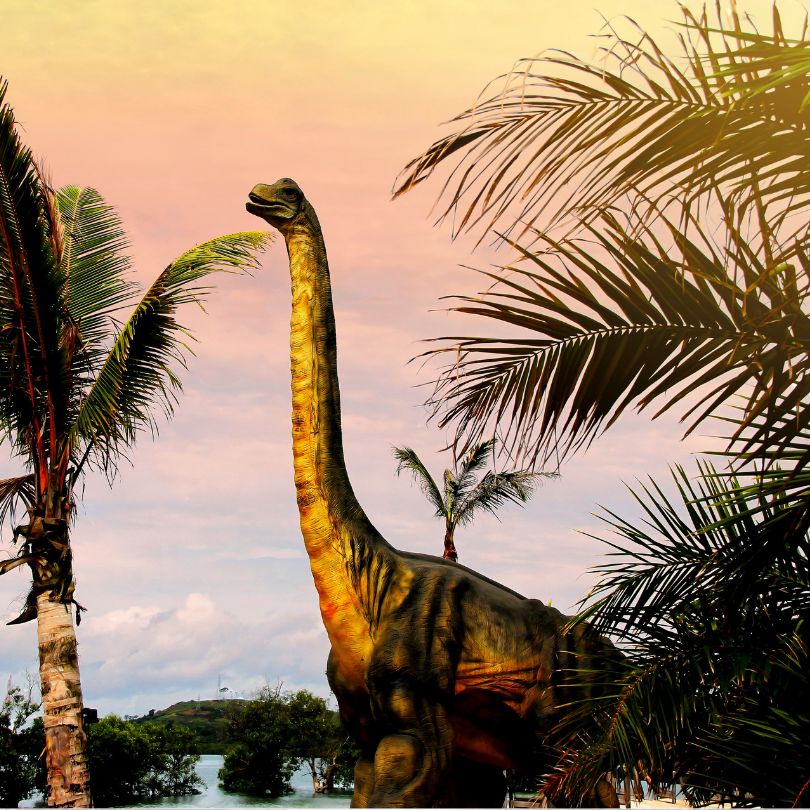
If INFJs were a dinosaur, they’d be the quietly massive Diplodocus. Diplodocus didn’t stomp around demanding attention like a T. rex; it just wandered through prehistoric forests, minding its leafy business, sensing the subtle patterns in the ferns and probably having an existential crisis about asteroid trajectories. INFJs are the same way. They’re not flashy. They’re not loud. But there’s depth there—this towering emotional and intuitive reach that lets them see what others miss. You might not notice them right away, but when you do, you realize they’ve been carrying emotional ecosystems on their back the whole time.
Like Diplodocus, INFJs are built for quiet endurance. They stretch themselves for others, often to the point of exhaustion, just trying to keep the peace and make the world a little more thoughtful. Their tail might not club you like an Ankylosaurus, but don’t mistake their gentleness for weakness—there’s strength in their stillness. They’ll remember the thing you said three years ago when you felt most alone. They’ll notice the subtle shifts in tone that everyone else missed. Diplodocus feels like the wise elder of the dino world, just like INFJs often come across as old souls in human form—contemplative, mysterious and vaguely haunted by beauty and tragedy.
The ISTP: Therizinosaurus
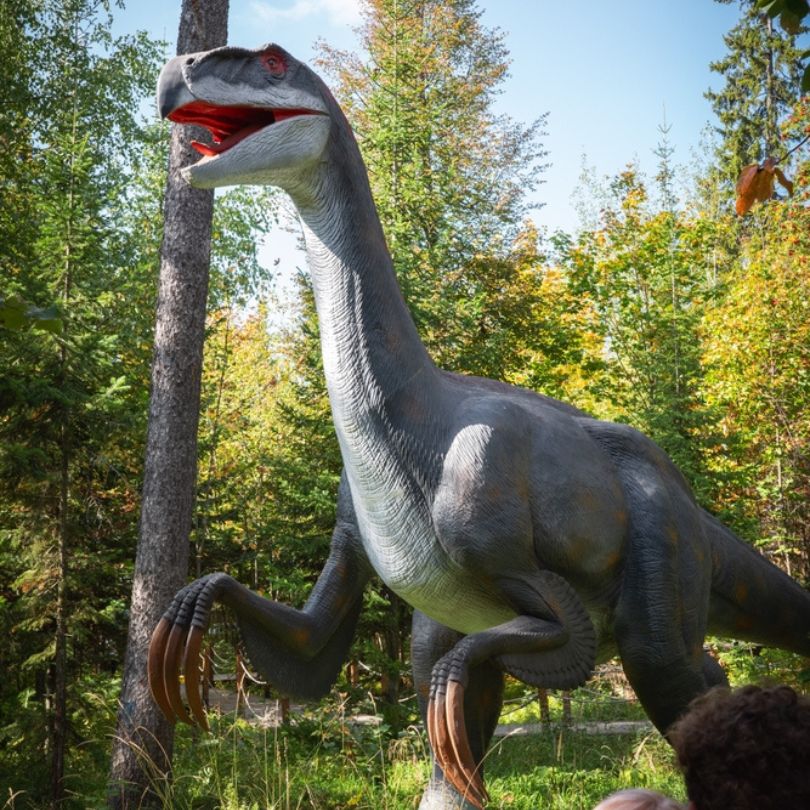
If ISTPs were a dinosaur, they’d be the Therizinosaurus—a bizarre, solitary weirdo with claws longer than a grown man is tall and vibes that scream “don’t ask questions.” Technically a herbivore, but built like it could front a metal band, Therizinosaurus didn’t care if it confused you. It had sickle-like claws stretching over three feet, a pot-belly, feathers and an attitude that said, “I do what I want, when I want, and you don’t get to know why.” That’s the ISTP spirit. Minimal talking. Maximum intimidation. And zero patience for your group project unless it involves tools or explosions. Therizinosaurus also had fast reflexes and an intimidating, quick response time. These were no head-in-the-clouds dinosaurs; they were aware, perceptive, and calmly terrifying.
ISTPs, like their razor-taloned counterpart, are hard to pin down. They’re observant, analytical, and eerily calm in situations that would make the rest of us cry or vomit (or both). When life gets chaotic, they don’t panic—they sharpen their claws. They have this internal code—don’t bother others, don’t be bothered and, if necessary, dismantle the system and rebuild it better. You might think you know them, but good luck predicting them. One minute they’re fixing your broken lawnmower with dental floss and a toothpick, the next they’re vanishing into the woods for six hours because they “just needed air.” They're the Therizinosaurus of modern life—strange, low-key terrifying, but weirdly essential.
The ISFP: Compsognathus
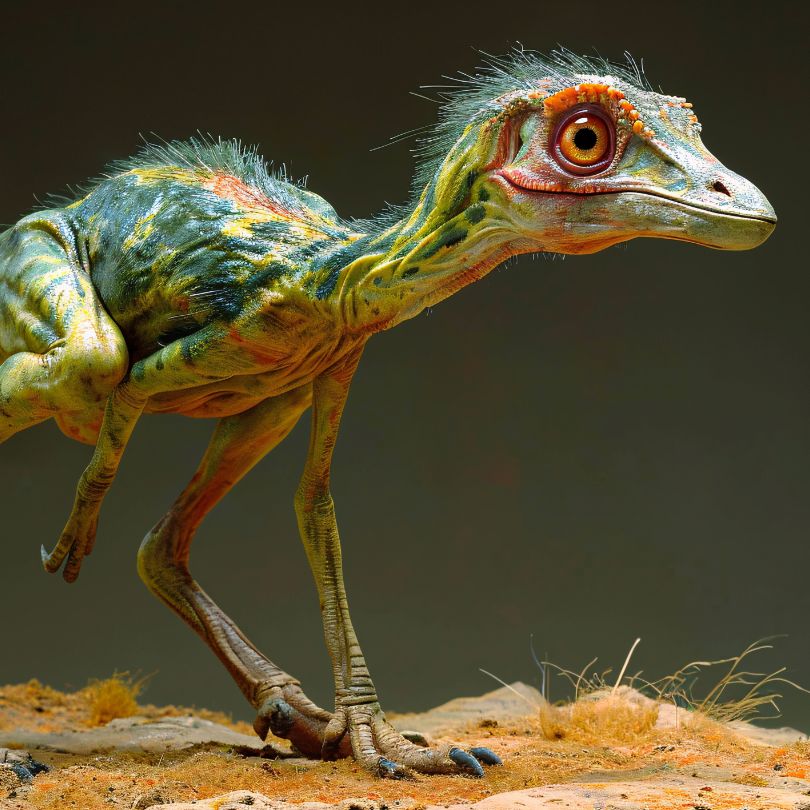
If ISFPs were dinosaurs, they’d be Compsognathus. This tiny creature was surprisingly adaptable and quick! It wasn’t out there flexing or roaring; it was zipping through the underbrush, living its best life in lime green and burnt orange, beautifully camouflaged and entirely unconcerned with anyone’s approval. It had aesthetic and a quiet drive and determination, just like the ISFP.
Compsognathus, nicknamed “Dainty Jaw,” was elegant in its movements but had no issue hunting down a snack when the time was right. Like the ISFP, it didn’t need the spotlight, but when instinct kicked in? Precision. Grace. Unflinching action. And then it was gone again—back to its solitude, sketchbook (we can imagine), its nature walk, and music nobody else knew about.
ISFPs, like Compys, notice everything. The shift in light through trees. The tremble in someone’s voice when they say they’re “fine.” The way a song hits differently when you're driving with the windows down.
But don’t let the soft edges fool you. When something (or someone) they care about is threatened, they’ll act fast, sharp, and without hesitation. They're fiercely loyal, deeply instinctive and stubborn in the best possible way.
The INTP: Troodon
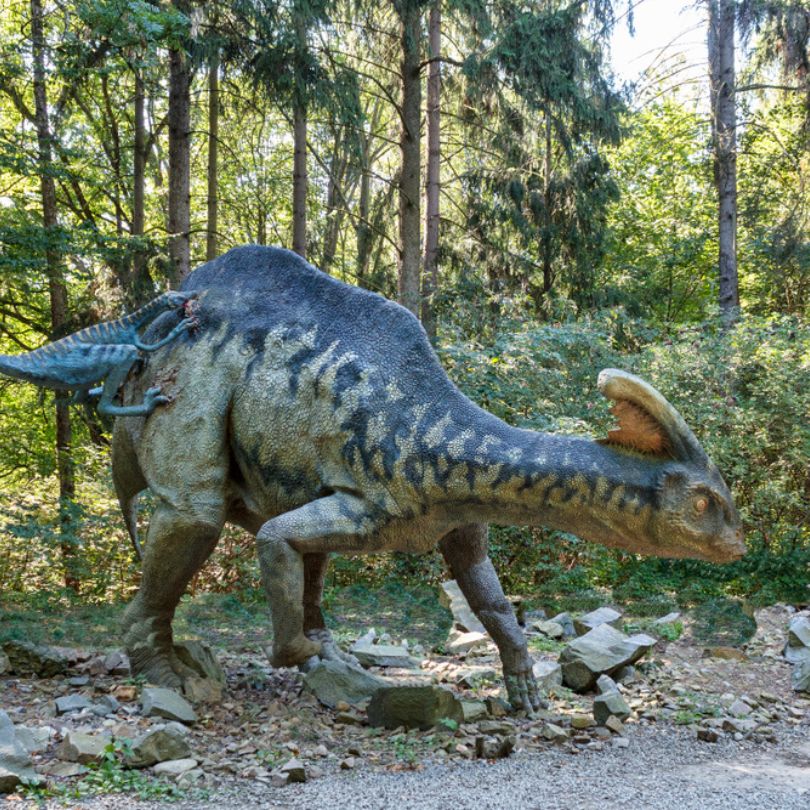
If INTPs were a dinosaur, they’d be the Troodon—big-brained, sharp-eyed and probably a little annoyed that you haven’t solved your own problem yet. Troodon had one of the largest brain-to-body ratios of any dinosaur paleontologists have discovered, with stereoscopic vision, grasping hands and enough curiosity to probably invent calculus if given a whiteboard and enough solitude. INTPs are basically the same—high-functioning thought machines who spend 90% of their energy figuring out how the world works, and 10% wondering if it’s even worth explaining it to the rest of us. Troodon didn’t thrive because it was the strongest. It thrived because it could think.
Like Troodon, INTPs observe before they act. They’re the ones mapping patterns, breaking systems apart just to see if they can reassemble them better, and asking inconvenient questions that make everyone else squirm. Their inner world is filled with wild hypotheses, abandoned theories, and a hunger for knowledge. Sure, they may forget to eat or make eye contact, but they’ll also solve problems that didn’t even have names yet. Troodon didn’t need claws the size of garden rakes or teeth the size of bananas. It had strategy. Subtlety. Precision. And if it had survived the asteroid, it probably would’ve been the first dino to start coding.
The INFP: Brachiosaurus
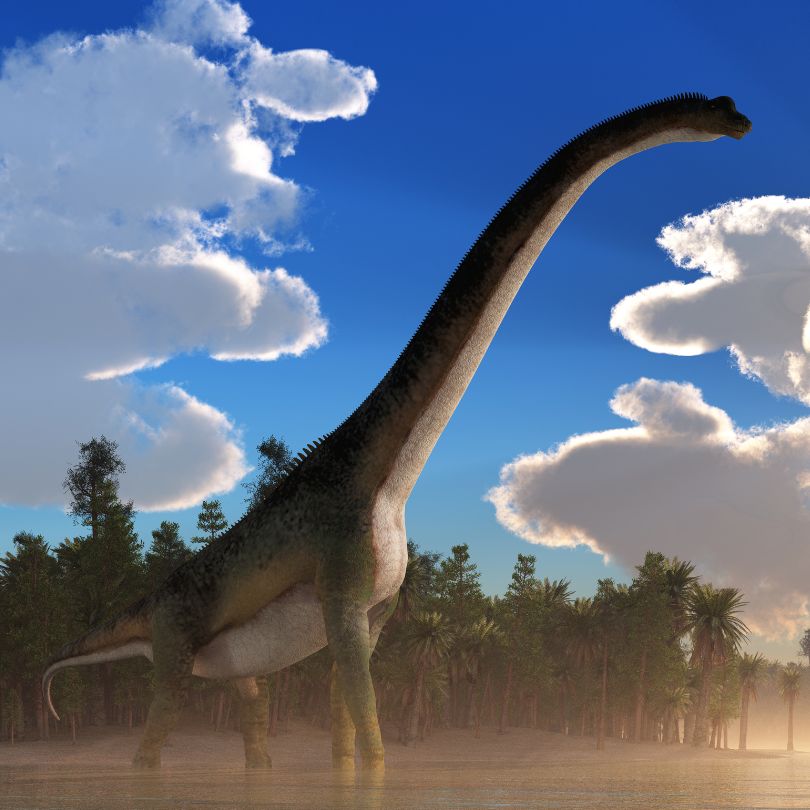
If INFPs were a dinosaur, they’d be the gentle Brachiosaurus. This serene giant towered above the noise, literally and metaphorically. With its long neck stretched toward the treetops and a heart that probably broke a little every time a flower got trampled, Brachiosaurus just wanted to exist in peace and nibble on some foliage. While other dinosaurs darted and scrambled, Brachiosaurus moved slowly and steadily. INFPs aren’t here for the hustle. They like to do things their way, in their time, with intention. Just because they’re not rushing doesn’t mean they’re lost. They’re observing. Processing. Imagining. And yes, eventually getting there.
Brachiosaurus wasn’t built for speed—it was built for presence. And so are INFPs. They show up for the things that matter: compassion, authenticity, the one goose with a limp that nobody else noticed. They may seem soft, but don’t confuse depth with weakness. Like the Brachiosaurus, they carry an entire ecosystem inside them—rich inner values, fierce loyalties, imaginary worlds and big-picture ideas. They’ll stand still and take in the world while everyone else rushes past, and they’ll remember the small moments that made it meaningful.
The ESTJ: Allosaurus
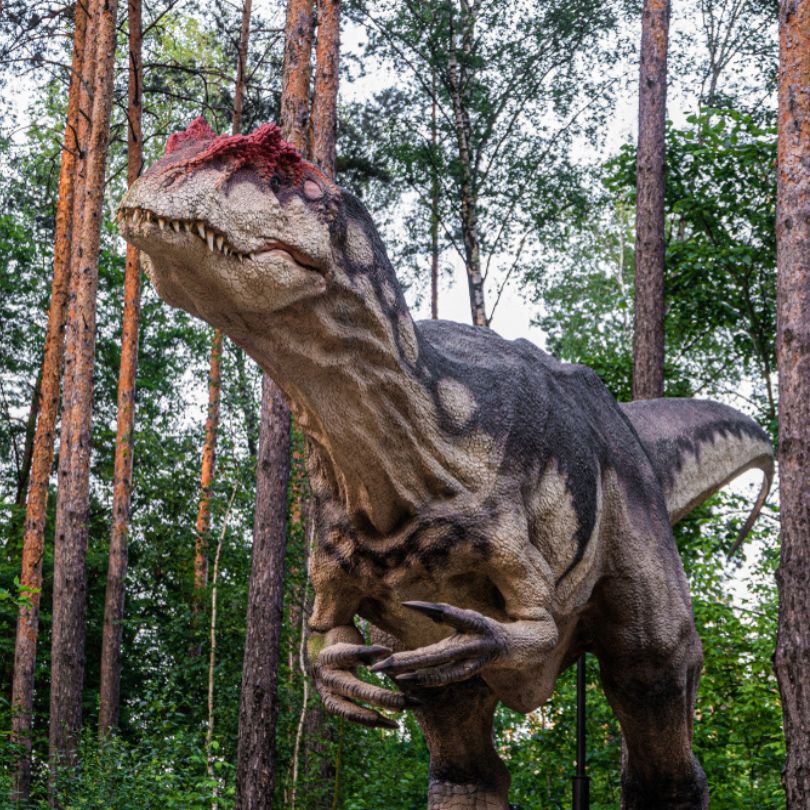
If ESTJs were a dinosaur, they’d be the fierce and intimidating Allosaurus. These giant leaders of the dinosaur world were confident, commanding, and effective. Living around 150 million years ago, Allosaurus was the dominant predator of its time, striding through Jurassic North America like a boss. It relied on calculation and planning rather than simple brute force. Fossil records suggest Allosaurs used ambush tactics and possibly coordinated attacks, with juveniles hunting differently than adults, adapting their strategy as they matured. That’s peak ESTJ energy: learn the rules, master the game, then streamline the whole system for maximum efficiency.
Allosaurus didn’t need the flair of a T. rex or the mystique of a Velociraptor. It led through presence, power, and results. ESTJs operate the same way. They step into chaos, organize it, and expect everyone to pull their weight—or get out of the way. Like Allosaurus with its strong jaws and heavy-duty claws, they’re problem-solvers with no patience for excuses. They don't just survive—they manage. Build. Execute. And while they might come off as intense, it’s only because they see what needs to be done and can’t understand why no one else is moving faster. You want an Allosaurus in your corner when the stakes are high—just don’t expect a lot of touchy-feely pep talks.
The ESFJ: Maiasaura
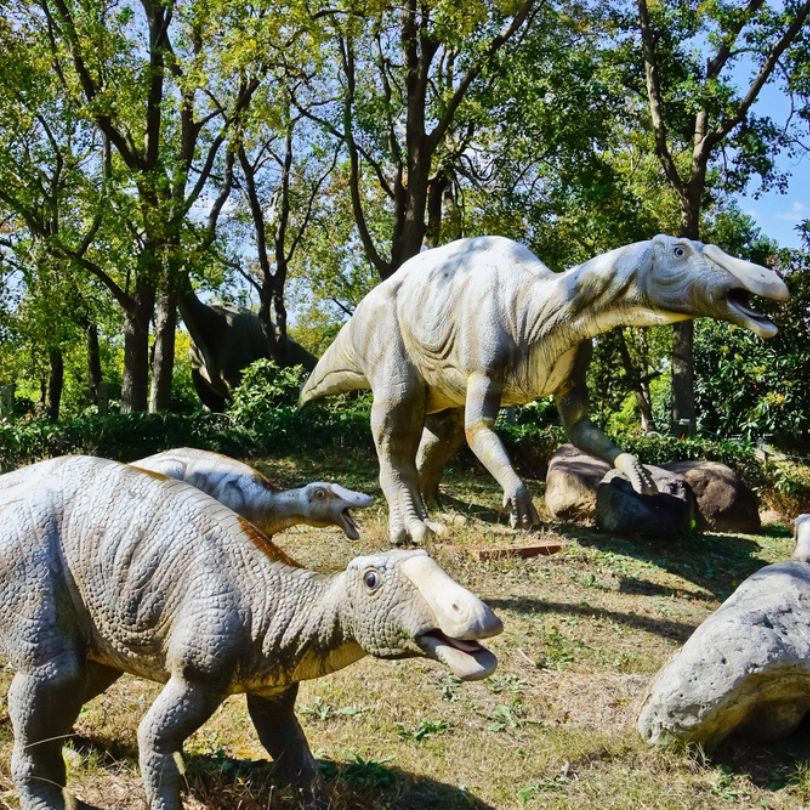
If ESFJs were a dinosaur, they’d be the Maiasaura—affectionately nicknamed the “good mother lizard,” and for good reason. These duck-billed herbivores were found in massive nesting colonies where adults actively cared for their young, bringing food to the nest and protecting their babies like prehistoric lifeguards. Fossils show they returned to the same nesting grounds year after year, which is basically the dinosaur version of organizing annual family reunions and remembering everyone’s dietary restrictions. ESFJs, like Maiasaura, prioritize loyalty, service and community. In the dinosaur world, their dedication to their herd and their young was pretty revolutionary.
But don’t let the warm fuzzies fool you—Maiasaura was sweet and smart. For an herbivore, it had one of the highest emotional intelligence levels among dinosaurs. It remembered locations, formed social bonds, and took care of its communities. ESFJs scan the environment for who needs help, who’s left out, and what needs to happen to make things better. They crave harmony and a sense of group cohesion. But push them too far or mess with someone they love, and you’ll see just how powerful protective love can be. It won’t come with claws—but it might come with a very pointed group text.
The ENTJ: Tyrannosaurus Rex
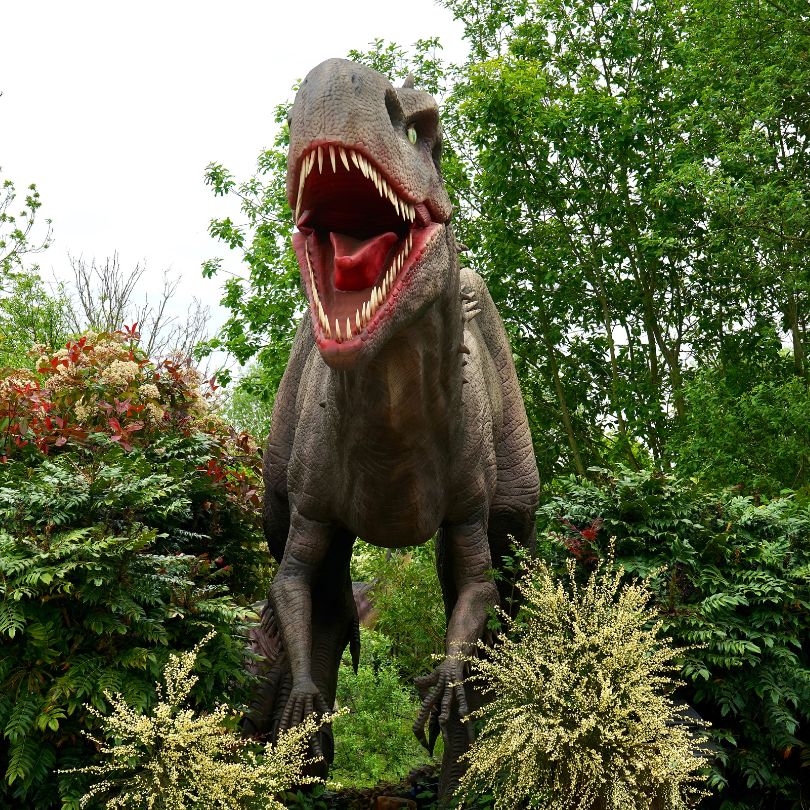
If ENTJs were a dinosaur, they’d be the Tyrannosaurus rex—bold, strategic, and walking around like they own the Late Cretaceous (because, let’s be honest, they kind of did). While most people see them as just a giant set of jaws on legs, it was actually a refined predator. Its brain, while not massive by today’s standards, was impressively developed for a dinosaur, especially in areas related to smell, vision, and motor control. It had razor-sharp instincts, long-range focus, and the ability to outthink prey that relied mostly on “run and hope.” ENTJs are wired the same way—commanding, efficient and ready to dismantle anything that gets in their way. You won’t find them flailing in uncertainty (even though that would look funny with their tiny arms). They’re already ten steps ahead, scheduling the ambush.
In one study, Suzana Herculano-Houzel of the Vanderbilt Brain Institute at Vanderbilt University calculated that “T. rexes had what it takes, in terms of number of neurons, to be as cognitively flexible as other animals today that have similar numbers of telencephalic neurons, which are macaws, baboons, macaques and also whales.” Up until recently, dinosaurs were all thought to be extremely small-minded, but new research, particularly about T. rex’s, is showing that they could have had more intelligence than we ever knew!
Another little-known fact about Tyrannosaurus Rex is that they were surprisingly adaptable. In fact, they could swim! Even in water, T. rex wasn’t off-duty. ENTJs share that vibe: if there's a barrier, it's just something to be optimized. They are hunter-gatherers of success, visionaries who make empires out of raw ambition. Sure, they may have short arms (metaphorically speaking), but they never come up short on goals. And once they’ve locked onto something, whether it’s a target or a mission, you’ll need more than armor and a good hiding spot to escape their reach.
The ENFJ: Oviraptor
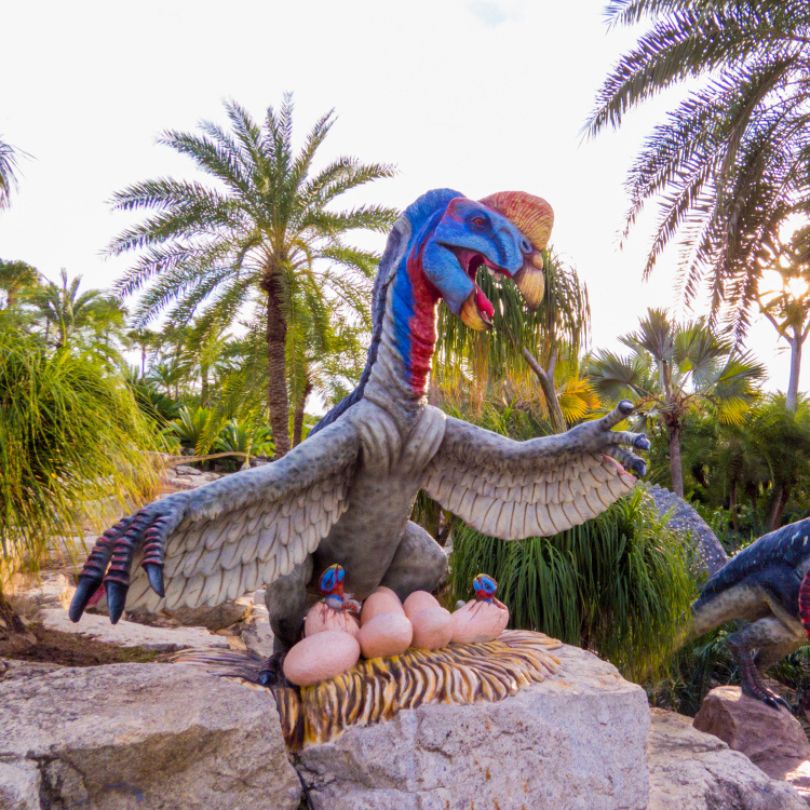
If ENFJs were a dinosaur, they’d be the Oviraptor; a misunderstood caregiver that prioritized its fellow dinosaurs more than its own individual survival. Originally labeled an “egg thief” (hence the name), this dino was later vindicated by fossil evidence showing it was actually protecting its own nest, brooding over its eggs like a prehistoric helicopter parent. Oviraptor’s nesting behavior was revolutionary in the dinosaur world, showing social intelligence, emotional investment, and the kind of long-term commitment that was rarely seen. Like the Oviraptor, ENFJs are all about nurturing, protecting and bringing out the best in others.
With a large brain relative to its size and a flexible diet that included everything from shellfish to seeds, Oviraptor wasn’t just emotionally intelligent—it was adaptable. ENFJs bring that same versatility to the table. They read the room, adjust on the fly, and know when to push forward and when to gently nudge. Unlike their ESFJ type-siblings, ENFJs enjoy variety, trailblazing and venturing into unknown territory. And if ENFJs were a dinosaur, they wouldn’t just rely on instinct – they’d take care of others, even if it meant that they were risking their own well-being in the process!
The ESTP: Deinonychus
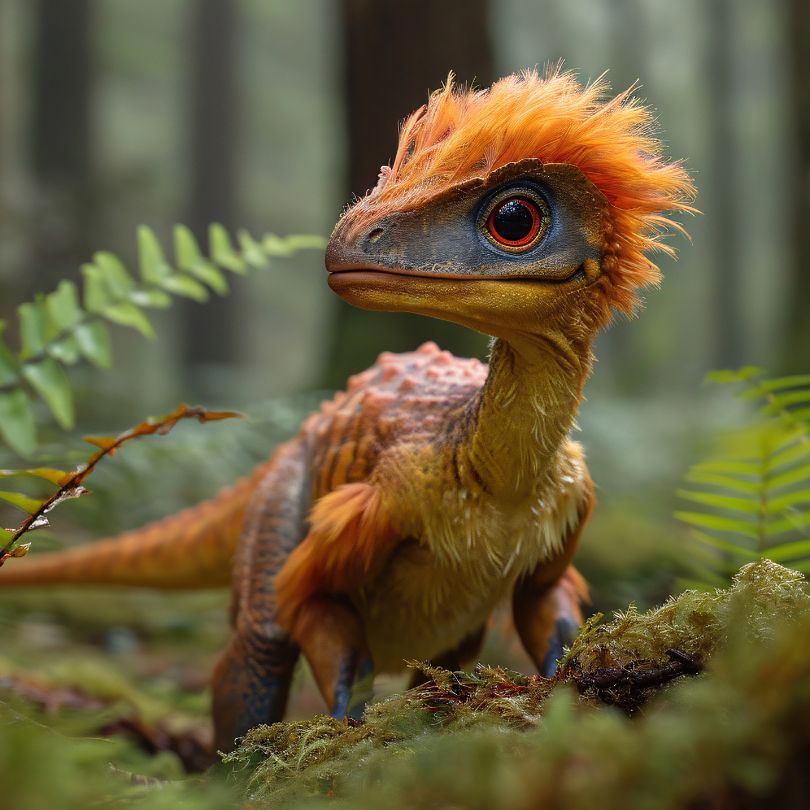
If ESTPs were a dinosaur, they’d be the Deinonychus—fast, fierce and fully aware of how cool they look in motion. This wasn’t your average lumbering predator. Deinonychus was built like a sleek, prehistoric parkour athlete, with powerful legs, grasping claws and a sickle-shaped talon that could gut prey with one well-timed kick. Like ESTPs, Deinonychus lived for action, thrived on adrenaline and brought a kind of thrilling, slightly terrifying charisma to the party—if the party involved hunting in coordinated packs and demolishing creatures twice its size.
ESTPs, much like their dino twin, are all about high-stakes presence. They think fast, move faster and can charm the feathers off a pterosaur if it helps them gain the upper hand. Deinonychus may not have been the biggest predator, but it was one of the most agile and daring—traits ESTPs wear like armor. They don’t spend much time overanalyzing. They do. And if they crash? They adapt mid-air and land on their feet with a grin. Whether they’re dominating a sport, arguing their way out of a speeding ticket or starting a business on impulse, ESTPs bring energy and edge to everything they touch. If you ever meet a Deinonychus, don’t blink. Just try to keep up.
The ESFP: Dromaeosaurus
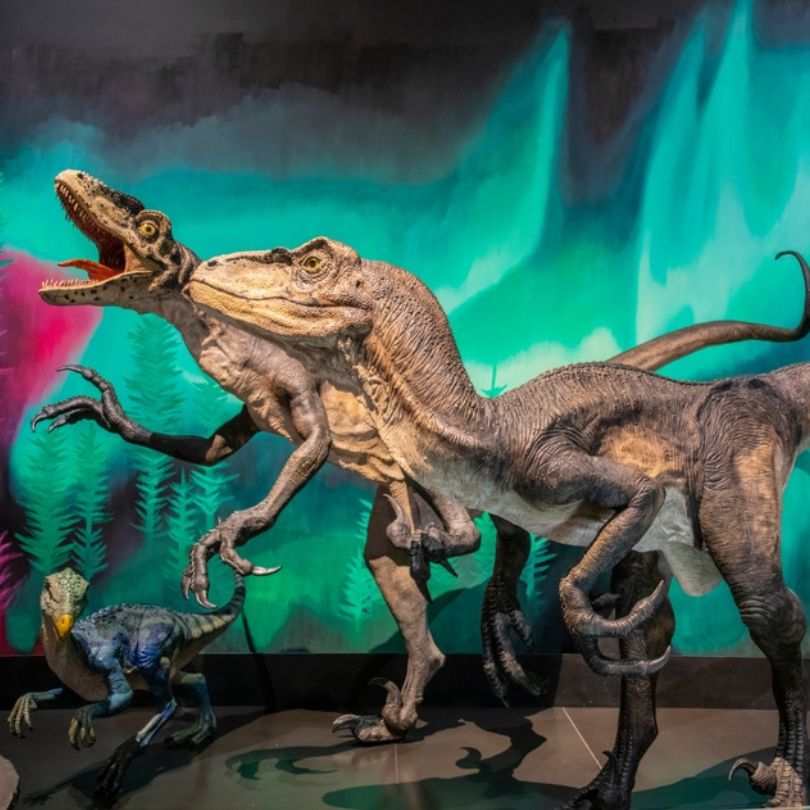
If ESFPs were a dinosaur, they’d be the Dromaeosaurus. This fast, flashy dinosaur always strove to be in the middle of the action. Living in Late Cretaceous North America, this little predator thrived in diverse environments, from lush woodlands to open plains—wherever the energy was high and the opportunities were ripe. At just about two meters long, it wasn’t the biggest dino on the block, but it didn’t need to be. With a relatively large brain and finely tuned senses, Dromaeosaurus made up for size with agility, quick thinking, and sheer guts. In my experience with ESFPs, they have these same characteristics! Throw them into a crisis and they can respond with speed, flexibility and an unexpected sense of humor and optimism.
ESFPs, like their dromaeosaurid counterpart, are built for sensory engagement and real-time responsiveness. They see, hear, feel everything—and they act fast. On top of that, these dinosaurs may have been extraverts (as far as dinosaurs go); fossil evidence suggests it may have hunted in packs, coordinating with others to bring down prey or scavenge like opportunistic geniuses. ESFPs are the same in a crisis—tuned in, adaptable and surprisingly effective when the stakes are high. Also, with their likely feathered bodies, Dromaeosaurs probably looked fabulous on the move. That’s ESFP energy: bold, social and unafraid to live life in full color, even if that means dancing on the edge of danger.
The ENTP: Saurolophus
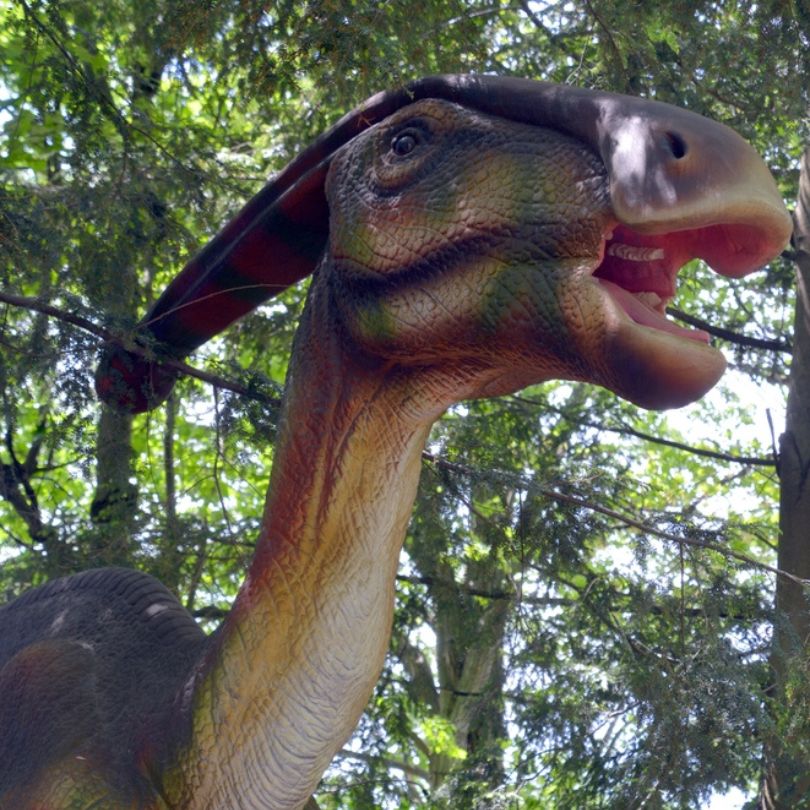
If ENTPs were a dinosaur, they’d be the Saurolophus. These curious dinos were adaptable and unafraid to travel off the beaten path. Unlike its flashier cousins with massive crests, Saurolophus kept things a little subtler—just a small spike-like ornament on its head, like a mohawk that said, “I could be weird if I wanted to, but I’m also busy conquering continents.” Fossils of this hadrosaur have been found in both Asia and North America, which is basically the prehistoric version of saying, “I thrive in any ecosystem, thanks.” ENTPs are built the same way—quick thinkers with flexible minds, always bouncing between ideas, locations and people, just to see what sticks (and often, a lot does).
Saurolophus wasn’t a brainless, brutish dinosaur. They were all about staying active and improvising mentally, socially and physically. It lived in inland forests, coastal wetlands, and probably would have thrived in a startup incubator if you gave it a laptop. Like the ENTP, it succeeded by staying ahead of the curve, moving fast and outwitting environmental shifts before they became problems. It didn’t need to be the loudest to be the most influential. It just had to be smart, fast and a little unpredictable. And while everyone else was settling into their comfort zones, Saurolophus was already off exploring the next continent—probably asking, “But what if we did it this way instead?”
The ENFP: Utahraptor
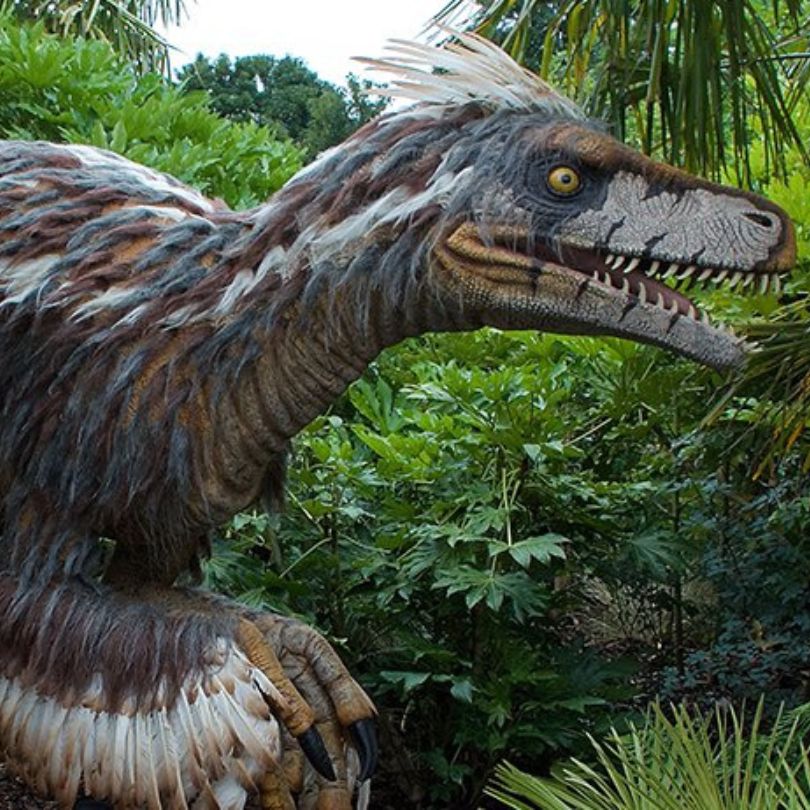
If ENFPs were a dinosaur, they’d be the Utahraptor—massive, feathered and wildly underestimated until it’s already too late. At over 6 meters long and weighing in around 350 kilograms, this wasn’t your scrappy little Velociraptor cousin. This was the rockstar of the dromaeosaur family—bold, fast, and equipped with 23-centimeter sickle claws that basically said, “I love you, but also I could disembowel you.” ENFPs bring that same unpredictable mix of warmth and chaos. Friendly? Absolutely. Idealistic? For sure. Capable of completely throwing you off your game with one dazzling ambush of energy, charm and unstoppable ideas? Without a doubt.
Utahraptor wasn’t just brawn—it was brainy, too. Fossil evidence suggests they hunted in groups, working together to take down prey several times their size. That kind of social coordination requires communication, quick thinking and a little bit of flair—aka ENFP territory. With feathers likely used for display (because why not look fabulous while hunting?), Utahraptor adapted to a wide range of environments, thriving in forests, floodplains and, presumably, emotionally-charged dinner parties. Like the ENFP, it was built for movement, connection and impact. Big-hearted. Big-clawed. Always chasing something a little too ambitious—and often catching it anyway.
What Do You Think?
Do you relate to your dinosaur? Do you have a different suggestion? Let us know on social media!
Susan Storm is a certified MBTI® practitioner and Enneagram coach. She is the mom of five children and loves using her knowledge of personality type to understand them and others better! Susan has written over 1,000 articles about typology as well as four books including: Discovering You: Unlocking the Power of Personality Type, The INFJ: Understanding the Mystic, The INTJ: Understanding the Strategist, and The INFP: Understanding the Dreamer. Find her at Psychology Junkie.


